

Key Takeaway: Sodium copper chlorophyllin (SCC) is a water-soluble compound derived from chlorophyll where the central magnesium atom is replaced with copper. It has been used for over 50 years in food and supplements and carries a well-characterised safety profile. As a supplement ingredient, it is notable because it represents a form of copper already bound to an organic, plant-derived molecule.
What is sodium copper chlorophyllin?
Chlorophyll is the green pigment found in plants. At its center is a magnesium atom held within a ring-shaped molecular structure called a porphyrin.
Sodium copper chlorophyllin (SCC) is a semi-synthetic derivative of chlorophyll. During production, the magnesium is replaced with copper, and the compound is converted into a water-soluble salt. The result is a stable, green compound where copper is bound to an organic porphyrin structure -- the same kind of ring that holds iron in haemoglobin (Linus Pauling Institute, Oregon State University; Link). Once absorbed, copper is carried through the body on ceruloplasmin, its main transport protein.
Unlike natural chlorophyll, SCC is water-soluble, which makes it usable in liquid formulations and oral supplements.
Where does SCC come from?
SCC can be derived from several chlorophyll-rich plant sources. Common sources include alfalfa, spinach, nettles, and mulberry leaves.
Mulberry leaf is one of the established sources for SCC production. The chlorophyll is extracted using ethanol as a solvent, then saponified (a chemical process that removes the phytol tail), and the magnesium atom is replaced with copper to produce the final compound.
The resulting SCC has the European food additive designation E141(ii) and is recognized as GRAS (Generally Recognized as Safe) for use in food and supplements.
What has SCC been studied for?
A long history of use (50+ years)
SCC has been used since the 1940s-1950s and has been available as an over-the-counter preparation for more than 50 years without serious reported side effects (Linus Pauling Institute; Link). This long track record is part of why it is considered a well-tolerated, food-grade ingredient today.
Laboratory and clinical research
SCC has been the subject of academic research for decades. One of the most cited studies was a randomized, double-blind trial conducted in Qidong, China, in which adults took either SCC or a placebo over four months. The study explored how SCC interacts with dietary compounds in the gastrointestinal tract (Egner PA et al., PNAS, 2001; Link). A follow-up study using accelerator mass spectrometry examined how chlorophyllin and chlorophyll behave in human volunteers (Jubert C et al., Cancer Prev Res, 2009; PMC).
These studies investigated SCC in specific research contexts and were not designed to evaluate it as an everyday copper supplement. They are referenced here for educational completeness, not as health claims. If you are interested in your own copper status, speak with a qualified healthcare professional.
SCC as a copper delivery form
Beyond its studied properties, SCC is notable as a supplement ingredient because it delivers copper in a pre-bound form.
In most copper supplements, copper is provided as an inorganic salt (copper sulfate, copper oxide) or an amino acid chelate (copper bisglycinate). In SCC, the copper atom is held within the porphyrin ring structure -- an organic molecule derived from chlorophyll.
This structural difference means the copper is not "free" -- it is already coordinated within a molecular framework, similar to how bound copper functions in the body. Whether this translates into meaningful differences in absorption or utilization compared to other copper forms is an area where more human research is needed. The NIH notes that no studies have directly compared bioavailability across copper supplement forms (NIH ODS).
What copper itself does in the body is, however, well established. As authorised EU health claims, copper contributes to normal energy-yielding metabolism, to the normal functioning of the nervous system, to the protection of cells from oxidative stress, and to normal iron transport in the body.
SCC vs chlorophyll vs chlorophyllin: what is the difference?
| Chlorophyll | Chlorophyllin | Sodium copper chlorophyllin (SCC) | |
|---|---|---|---|
| Origin | Natural, in all green plants | Semi-synthetic derivative | Semi-synthetic derivative |
| Central metal | Magnesium | Varies (often copper) | Copper |
| Solubility | Fat-soluble | Water-soluble | Water-soluble |
| Stability | Degrades quickly | More stable | Most stable |
| Copper content | No | Depends on form | Yes |
| EU designation | Natural pigment | E140(ii) | E141(ii) |
| Common use | Food, photosynthesis | Supplements, food coloring | Supplements, food coloring |
Source: Linus Pauling Institute (Link)
Safety and side effects
SCC has a long safety record spanning 50+ years of commercial use. Known side effects are minor:
- Green discoloration of urine or stool (harmless, expected)
- Occasional yellow or black discoloration of the tongue
- Rare GI discomfort at high doses
Because SCC contains copper, excessive intake should be avoided. The tolerable upper intake level for copper in adults is 10 mg/day (NIH ODS). Standard supplement doses of SCC provide 1-2 mg of elemental copper per serving.
Frequently asked questions
Is sodium copper chlorophyllin the same as chlorophyll?
No. SCC is a semi-synthetic derivative of chlorophyll. The magnesium at the center of chlorophyll is replaced with copper, and the compound is made water-soluble. SCC is more stable and delivers copper, while natural chlorophyll does not.
Is SCC safe to take as a supplement?
SCC has been used commercially for over 50 years without serious reported side effects. It has GRAS status and the EU food additive designation E141(ii). Standard supplement doses are well within safe copper intake limits. As with any supplement, consult a healthcare professional if you have a medical condition.
How much copper does SCC contain?
The copper content depends on the specific product formulation. In CSR-01, each capsule contains 100 mg of sodium copper chlorophyllin.
Can SCC help with copper deficiency?
SCC provides copper in a bound, organic form. Whether it is appropriate for a given individual depends on the dose and personal circumstances. For a comparison of all available forms, see our guide to copper supplement forms. If you suspect a copper deficiency, work with your healthcare provider on an appropriate plan.
SCC in CSR-01
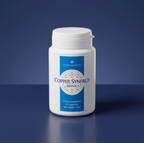
CSR-01 by Copper Synergy uses 100 mg of sodium copper chlorophyllin derived from mulberry leaves as its primary copper source. The formula also includes 8 co-factors: L-Arginine (150 mg), L-Lysine (100 mg), L-Glycine (100 mg), Vitamin C (80 mg), Vitamin A (800 mcg), Resveratrol (50 mg), Fermented soybean extract (40 mg), and Dandelion aerials (30 mg).
Within this formula, copper contributes to the normal functioning of the nervous system and to normal energy-yielding metabolism, while vitamin C and copper both contribute to the protection of cells from oxidative stress -- a plant-based way to give your body the copper it relies on every day.
Important: Copper supplementation is not appropriate for individuals with Wilson's disease. Consult your healthcare provider before starting any copper supplement.
Sources:
- Linus Pauling Institute. "Chlorophyll and Metallo-Chlorophyll Derivatives." Link
- Egner PA et al. (2001). "Chlorophyllin intervention reduces aflatoxin-DNA adducts in individuals at high risk for liver cancer." PNAS. Link
- Jubert C et al. (2009). "Effects of chlorophyll and chlorophyllin on low-dose aflatoxin B1 pharmacokinetics in human volunteers." Cancer Prev Res. PMC
- NIH Office of Dietary Supplements. "Copper -- Health Professional Fact Sheet." Link
Curious about your copper intake?
Take the Copper Nutrition Quiz to learn more.
Related research
Continue exploring this topic:
Frequently asked questions
What is sodium copper chlorophyllin?
It is a water-soluble compound made from chlorophyll (the green pigment in plants) with copper at its centre. It is used as a food colour and studied as a plant-based source of copper.
Why use chlorophyllin instead of other copper forms?
Because the copper is bound within a plant-derived molecule, it is a gentle, food-like form. The article compares its profile with other copper supplement forms.
Is sodium copper chlorophyllin safe?
It is widely used in foods and supplements and generally well tolerated. As with any supplement, use sensible doses balanced with zinc, and consult a professional if you have a medical condition.


