

Meta title: Ceruloplasmin: What It Is, Why It Matters & How to Understand It (2026 Guide) Meta description: Ceruloplasmin carries about 95% of copper in your blood. Learn what it does, what low levels can mean, how it is tested, and what the research says. Educational guide. Primary keyword: ceruloplasmin (14,800/mo, competition 1/100) Secondary: ceruloplasmin levels, low ceruloplasmin, ceruloplasmin blood test, ceruloplasmin and copper Author: The Copper Synergy Team
Key Takeaway: Ceruloplasmin is a protein made by your liver that carries about 95% of the copper in your blood. In published research, low levels have been observed alongside anemia, neurological findings, and iron buildup in tissues. A ceruloplasmin blood test can help a doctor look at copper metabolism that standard panels often miss. This article is educational and is not a substitute for medical advice.
What is ceruloplasmin?
Ceruloplasmin is a copper-carrying protein synthesized in the liver. It binds six to eight copper atoms per molecule and transports them through the bloodstream to cells that need them.
But ceruloplasmin does more than carry copper. It also functions as a ferroxidase -- an enzyme that converts iron from one form (Fe2+) to another (Fe3+) so your body can move iron out of storage and into circulation. Without this step, iron gets trapped in tissues, even when your blood iron looks low.
This dual role -- copper transport and iron regulation -- is why ceruloplasmin sits at the intersection of two of the most common mineral deficiencies. It is also a useful starting point for understanding why copper status is worth knowing in the first place.
Sources:
- Osaki S, Johnson DA, Frieden E. "The role of ceruloplasmin in iron metabolism." J Biol Chem. 1966;241(12):2746-2751. PubMed
- StatPearls. "Biochemistry, Ceruloplasmin." NCBI Bookshelf. Link
What does ceruloplasmin do in your body?
1. Carries copper to where it is needed
About 95% of the copper circulating in your blood is bound to ceruloplasmin. This "bound" copper is delivered to cells in a controlled way. The remaining 5% -- called non-ceruloplasmin copper or "free" copper -- travels loosely attached to albumin and small molecules. Understanding the difference between free and bound copper is essential for interpreting copper status.
Source: Linder MC, Hazegh-Azam M. "Copper biochemistry and molecular biology." Am J Clin Nutr. 1996;63(5):797S-811S. PubMed
2. Regulates iron metabolism
Ceruloplasmin's ferroxidase activity is essential for iron to leave storage sites (like the liver and spleen) and enter the blood via transferrin. Without functional ceruloplasmin, iron accumulates in organs while the blood becomes iron-poor -- a paradox that can cause anemia even when iron stores appear adequate. This is one reason copper and iron are so often talked about together: copper contributes to normal iron transport in the body.
Source: Harris ZL et al. "Aceruloplasminemia: molecular characterization of this disorder of iron metabolism." Proc Natl Acad Sci USA. 1995;92:2539-2543. PubMed
3. Interacts with oxidation in the blood
In the bloodstream, ceruloplasmin participates in handling iron-related oxidation. By converting Fe2+ to Fe3+, it is involved in limiting iron-catalyzed free radical production (the Fenton reaction) described in biochemistry research. As a nutrient, copper contributes to the protection of cells from oxidative stress -- a recognised role that sits alongside this biology.
Source: Gutteridge JM. "Inhibition of the Fenton reaction by the protein caeruloplasmin and other copper complexes." Chem Biol Interact. 1985;56(1):113-120. PubMed
What do low ceruloplasmin levels mean?
A ceruloplasmin level below the normal range (typically 20-40 mg/dL in adults) may indicate a problem with copper metabolism. Common causes of low ceruloplasmin include:
- Wilson's disease -- a genetic condition where copper accumulates in organs. Ceruloplasmin is usually below 10 mg/dL.
- Menkes disease -- a rare genetic disorder affecting copper absorption.
- Copper deficiency -- from diet, malabsorption, or excess zinc supplementation.
- Severe liver disease -- since ceruloplasmin is made in the liver.
- Malnutrition or protein-losing conditions -- including nephrotic syndrome.
High ceruloplasmin can occur during pregnancy, infection, inflammation, or with estrogen-containing medications. It is an acute-phase reactant, meaning levels rise as part of the body's inflammatory response. These are all questions for a doctor to interpret -- not something to self-diagnose.
Sources:
The ceruloplasmin blood test: what to ask your doctor
A ceruloplasmin test is a simple blood draw. It is not part of standard blood panels -- you need to ask for it specifically. Your doctor may order it if you have:
- Unexplained anemia that does not respond to iron supplements
- Neurological symptoms (numbness, tremors, coordination problems)
- Suspected Wilson's disease (usually in people under 40)
- Low neutrophil count (neutropenia)
- A history of zinc supplementation without copper
Normal range: 20-40 mg/dL (adults). Ranges vary slightly by lab, sex, and pregnancy status.
What to test alongside it:
- Serum copper
- 24-hour urine copper (if Wilson's disease is suspected)
- Ferritin and transferrin saturation (to assess iron status)
- Zinc levels (to check for zinc-induced copper depletion)
Source: MedlinePlus. "Ceruloplasmin Test." Link
Ceruloplasmin in neurological research: what studies describe
Ceruloplasmin has been studied in the context of neurological conditions. This research is observational and mechanistic -- it describes associations between copper handling and these conditions. It does not establish that any supplement prevents, treats, slows, or reverses them. We include it here purely so you understand the science being discussed, and the studies focus on the balance between bound copper (carried by ceruloplasmin) and free copper (non-ceruloplasmin copper).
What studies have described
- In Alzheimer's disease, meta-analyses report that non-ceruloplasmin copper (free copper) in serum tends to be higher in patients than in healthy controls. Researchers reported that ceruloplasmin fragmentation in the serum of AD patients may be related to free copper deregulation (Squitti R et al., 2009).
- Cerebrospinal fluid ceruloplasmin levels have been associated with cognitive decline and brain atrophy in people with underlying amyloid pathology (Diouf I et al., 2020).
- Aceruloplasminemia (complete absence of ceruloplasmin) is a rare genetic disorder associated with iron deposition in the brain -- typically described between ages 30 and 50.
- In mouse models, ceruloplasmin deficiency was associated with changes in iron handling and behavioral measures (Chen H et al., 2022).
Important note: These studies examine the biology of ceruloplasmin and copper metabolism. They do not show that a food supplement prevents, treats, or slows any disease, and nothing here should be read that way. If you have any concern about your health, speak to a qualified healthcare professional.
Sources:
- Squitti R et al. "Non-ceruloplasmin copper distinguishes a distinct subtype of Alzheimer's disease." Curr Alzheimer Res. 2016;13(12):1318-1327. PubMed
- Squitti R et al. "Ceruloplasmin fragmentation is implicated in 'free' copper deregulation of Alzheimer's disease." Int J Alzheimers Dis. 2009. PMC
- Diouf I et al. "Cerebrospinal fluid ceruloplasmin levels predict cognitive decline and brain atrophy." Neurobiol Aging. 2020;87:112-119. PMC
- Chen H et al. "Ceruloplasmin deficiency impaired brain iron metabolism and behavior in mice." Cell Biochem Biophys. 2022;80:385-393. Springer
What factors influence ceruloplasmin levels?
Based on published research, several nutrients and factors affect ceruloplasmin synthesis:
Copper availability
Ceruloplasmin is a copper-dependent protein. Without adequate copper, the liver produces apoceruloplasmin (the protein without copper), which is unstable and quickly degraded. Copper deficiency directly leads to low functional ceruloplasmin. In short, the body needs enough copper for this protein to be made and to do its job -- copper contributes to the normal functioning of the nervous system and to normal energy-yielding metabolism.
Vitamin A (retinol)
A 1987 study in The Journal of Nutrition showed that retinoic acid (a form of vitamin A) increased ceruloplasmin activity up to four times control levels in rats. However, this effect required adequate copper -- in copper-deficient animals, vitamin A alone did not increase ceruloplasmin (Mejia LA, Arroyave G, 1987).
Zinc balance
Excess zinc competes with copper for absorption in the intestine. Long-term zinc supplementation without copper can deplete copper stores and reduce ceruloplasmin. The recommended dietary zinc-to-copper ratio is approximately 8-15:1.
Liver function
Since ceruloplasmin is synthesized in the liver, severe liver disease reduces its production.
Sources:
- Mejia LA, Arroyave G. "Induction of ceruloplasmin synthesis by retinoic acid in rats." J Nutr. 1987;117(12):2087-2093. PubMed
- Fischer PW et al. "Interactions in indices of vitamin A, zinc and copper status." Br J Nutr. 1996;75(6):919-928. PubMed
Frequently asked questions
What is a ceruloplasmin test?
A ceruloplasmin test measures the level of the ceruloplasmin protein in your blood. It is used to help diagnose Wilson's disease, copper deficiency, and related conditions. It is a standard blood draw and results are typically available within a few days.
What does it mean if ceruloplasmin is low?
Low ceruloplasmin (below 20 mg/dL) may indicate copper deficiency, Wilson's disease, severe malnutrition, or liver disease. Your doctor will interpret results alongside other tests such as serum copper and iron studies.
Can I support healthy ceruloplasmin naturally?
Research suggests adequate copper intake, together with sufficient vitamin A, is part of how the body maintains ceruloplasmin -- and copper contributes to normal energy-yielding metabolism and to the normal functioning of the nervous system. That said, self-supplementing without testing is not recommended: work with your healthcare provider to identify the underlying cause of low levels.
What is the difference between bound copper and free copper?
Bound copper is copper attached to ceruloplasmin or other proteins -- this is the form your cells can use safely. Free copper (non-ceruloplasmin copper) circulates loosely in the blood and, in excess, has been associated with oxidative stress in published research. About 95% of blood copper is normally in the bound form.
How is ceruloplasmin connected to iron?
Ceruloplasmin acts as a ferroxidase -- it converts iron from Fe2+ to Fe3+, which is necessary for iron to bind to transferrin and circulate in the blood. Without functional ceruloplasmin, iron gets trapped in tissues (liver, brain) while the blood becomes iron-deficient.
Understanding copper forms: bound vs free
The research above highlights an important distinction: not all copper in your body behaves the same way.
- Bound copper (ceruloplasmin-bound) is transported safely and delivered to cells that need it.
- Free copper (non-ceruloplasmin) can cross the blood-brain barrier and, in excess, has been associated with oxidative damage in studies of neurological conditions.
This distinction is central to understanding why copper form matters when you choose a supplement. Sodium copper chlorophyllin (SCC) -- derived from chlorophyll in mulberry leaves -- delivers copper already bound to an organic molecule, similar to how copper is found in food sources like liver and shellfish. Copper contributes to the protection of cells from oxidative stress and to normal iron transport in the body.
Important: Copper supplementation is not appropriate for individuals with Wilson's disease. Consult your healthcare provider before starting any copper supplement.
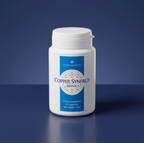
CSR-01 by Copper Synergy uses 100 mg of sodium copper chlorophyllin per capsule, alongside 8 co-factors including vitamin A (800 mcg), which is included in the formulation alongside copper. It is a food supplement, not a medicine -- and it is not intended to diagnose, treat, or change any of the conditions discussed above.
Learn more about CSR-01 and its formulation
Sources cited in this article:
- Osaki S et al. (1966). "The role of ceruloplasmin in iron metabolism." J Biol Chem. PubMed
- StatPearls. "Biochemistry, Ceruloplasmin." NCBI
- Linder MC, Hazegh-Azam M. (1996). "Copper biochemistry and molecular biology." Am J Clin Nutr. PubMed
- Harris ZL et al. (1995). "Aceruloplasminemia." Proc Natl Acad Sci USA. PubMed
- Gutteridge JM. (1985). "Inhibition of the Fenton reaction by caeruloplasmin." Chem Biol Interact. PubMed
- Cleveland Clinic. "Ceruloplasmin Test." Link
- Mount Sinai. "Ceruloplasmin blood test." Link
- MedlinePlus. "Ceruloplasmin Test." Link
- Squitti R et al. (2016). "Non-ceruloplasmin copper in Alzheimer's disease." Curr Alzheimer Res. PubMed
- Squitti R et al. (2009). "Ceruloplasmin fragmentation in Alzheimer's disease." Int J Alzheimers Dis. PMC
- Diouf I et al. (2020). "CSF ceruloplasmin predicts cognitive decline." Neurobiol Aging. PMC
- Chen H et al. (2022). "Ceruloplasmin deficiency impaired brain iron metabolism in mice." Cell Biochem Biophys. Springer
- Mejia LA, Arroyave G. (1987). "Ceruloplasmin induction by retinoic acid." J Nutr. PubMed
- Fischer PW et al. (1996). "Interactions of vitamin A, zinc and copper status." Br J Nutr. PubMed
Wondering where your copper status really stands?
Take the Copper Nutrition Quiz to learn more.
Related research
Continue exploring this topic:
Frequently asked questions
What does ceruloplasmin do?
Ceruloplasmin is the main copper-carrying protein in your blood. It transports most of your circulating copper and is involved in iron metabolism and in iron-related oxidation handling.
What does a low ceruloplasmin level mean?
Low ceruloplasmin can indicate low copper status, though other factors can affect it. A doctor interprets it alongside a serum copper test.
How is ceruloplasmin related to copper supplements?
Adequate copper supports normal ceruloplasmin levels, and the form and bioavailability of a copper supplement can influence how well your body maintains this protein.


