
Disclosure: Copper Synergy manufactures CSR-01, one of the products discussed below.
Key Takeaway: Copper supplements come in several forms -- from inorganic salts like copper oxide to chelated forms like copper bisglycinate and plant-derived compounds like sodium copper chlorophyllin. The NIH notes that no studies have directly compared their bioavailability in humans. This guide breaks down what is known about each form so you can make an informed decision with your healthcare provider.
Why the form of copper matters
Your body needs about 900 mcg of copper per day (NIH ODS; Link). Most people get enough from food. But for those with documented deficiency, malabsorption, or high zinc intake, supplementation may be appropriate -- a conversation worth having with your healthcare provider.
Not all copper supplements deliver copper in the same way. The chemical form affects how the copper is absorbed and how well it is tolerated. The distinction between free copper and bound copper in the body is central to understanding why form matters. Copper is an essential trace mineral, and within a balanced intake it contributes to the protection of cells from oxidative stress and to the normal functioning of the nervous system.
Copper supplement forms compared
| Form | Type | Absorption estimate | GI tolerance | Cost | Notes |
|---|---|---|---|---|---|
| Copper oxide | Inorganic | <10% | Variable | Lowest | Poorest bioavailability. Some studies question whether it delivers meaningful copper. |
| Copper sulfate | Inorganic salt | 20-50% | Poor | Low | Used in research. Can cause nausea and GI irritation at higher doses. |
| Copper gluconate | Organic salt | Moderate | Good | Low-moderate | Widely used in multivitamins and food fortification. Proven safety record. |
| Copper citrate | Organic salt | Moderate | Good | Moderate | Similar profile to gluconate. Less studied. |
| Copper bisglycinate | Amino acid chelate | 30-60% | Best | Higher | Copper bonded to two glycine molecules. Reduced interaction with phytates. Best GI tolerance among common forms. (PMC) |
| Sodium copper chlorophyllin | Plant-derived | Under investigation | Good | Higher | Copper bound within a porphyrin ring derived from chlorophyll. Water-soluble. 50+ years of commercial use. (Linus Pauling Institute) |
Important caveat: The NIH Office of Dietary Supplements states that no studies have compared the bioavailability of copper from these various forms. The absorption estimates above are based on available research on individual forms, not head-to-head comparisons.
What to look for in a copper supplement
1. Form of copper
Avoid copper oxide -- its absorption may be below 10%. Chelated forms (bisglycinate) and organic forms (gluconate, SCC) are generally better absorbed.
2. Dose
The RDA is 900 mcg (0.9 mg). Most supplements provide 1-2 mg. The upper limit is 10 mg/day. More is not better with copper -- excess intake can cause liver damage.
3. Co-factors
Certain nutrients are studied alongside copper because they interact with how the body handles it:
- Vitamin A (retinol): Research suggests it plays a role in ceruloplasmin synthesis, the protein that carries copper in the blood (Mejia LA, J Nutr, 1987; PubMed)
- Vitamin C: Frequently paired with copper in formulations. Like copper, vitamin C contributes to the protection of cells from oxidative stress
- Zinc balance: If you take zinc, ensure your supplement includes copper or that you take copper separately
4. Third-party testing
Look for supplements that have been tested by independent labs (NSF, USP, ConsumerLab) for purity and heavy metals.
5. Absence of unnecessary additives
Check for artificial colors, fillers, and allergens. Simpler formulations are generally preferable.
Frequently asked questions
What is the best form of copper to take?
There is no definitive answer based on current research. Copper bisglycinate offers the best documented GI tolerance and absorption among common forms. Sodium copper chlorophyllin delivers copper in a plant-derived bound form. Avoid copper oxide due to poor absorption.
How much copper should I take daily?
The RDA for adults is 900 mcg/day. Do not exceed 10 mg/day (the tolerable upper limit). If you have documented deficiency, your doctor may recommend a specific dose.
Can I take copper and zinc together?
Zinc and copper compete for absorption. If you take zinc, balance it with copper -- the recommended ratio is approximately 8-15:1 (zinc to copper). Taking them at different times of day may reduce competition.
Do I need a copper supplement if I eat well?
Most people who eat a varied diet meet their copper needs without supplementation. Supplements may be appropriate for those with documented copper deficiency, malabsorption conditions, or high zinc intake.
Is copper supplementation safe long-term?
At appropriate doses (within the RDA or as directed by a healthcare provider), copper supplementation has a good safety profile. Long-term high-dose supplementation without medical supervision carries risk of liver damage.
About CSR-01
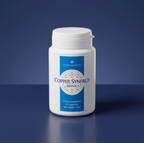
CSR-01 by Copper Synergy uses sodium copper chlorophyllin (100 mg per capsule) derived from mulberry leaves. It includes 8 co-factors: L-Arginine (150 mg), L-Lysine (100 mg), L-Glycine (100 mg), Vitamin C (80 mg), Vitamin A (800 mcg), Resveratrol (50 mg), Fermented soybean extract (40 mg), and Dandelion aerials (30 mg). 60 capsules per bottle. Made in France in a GMP-certified facility. As a food supplement, it is intended to complement a varied, balanced diet -- not to replace one.
Important: Copper supplementation is not appropriate for individuals with Wilson's disease. Consult your healthcare provider before starting any copper supplement.
Sources:
- NIH Office of Dietary Supplements. "Copper -- Health Professional Fact Sheet." Link
- PMC8188816. "Relative bioavailability of organic bis-glycinate bound copper." PMC
- Linus Pauling Institute. "Chlorophyll and Metallo-Chlorophyll Derivatives." Link
- Mejia LA, Arroyave G. (1987). "Ceruloplasmin induction by retinoic acid." J Nutr. PubMed
Curious whether you are getting enough copper from your diet?
Take the Copper Nutrition Quiz to learn more.
Related research
Continue exploring this topic:
Frequently asked questions
Which copper supplement form is best absorbed?
Chelated and plant-derived forms such as copper chlorophyllin or copper bisglycinate are generally considered more bioavailable than copper oxide, which is poorly absorbed.
What is the difference between copper forms?
They differ in how the copper is bound, which affects absorption and tolerance. The article compares chelated, gluconate, oxide and chlorophyllin forms side by side.
Should I take copper with zinc?
Copper and zinc compete for absorption, so balance matters. Many people take them in a sensible ratio rather than high-dose zinc alone, which can lower copper over time.


