

Key fact: Most "memory supplements" on the market lack rigorous evidence. The 7 nutrients below are the ones most often studied in peer-reviewed nutrition research. We separate the science from the marketing, look at what the research actually shows, and explain the forms and intakes commonly discussed. This is educational information, not medical advice or a promise of results.
What Should You Look For in a Memory Supplement?
If you feel like your sharpness isn't what it used to be, it's natural to want it back. Before reaching for a supplement, it helps to understand what nutrition research actually covers. Cognition is complex and shaped by sleep, stress, age, diet and overall health. No food supplement treats, cures or improves memory or any cognitive condition. What nutrition science can talk about is the role certain nutrients play in normal body and nervous-system function — and making sure you are not running low on them.
Tardy et al. (2020) published a comprehensive review in Nutrients noting that several vitamins and minerals — including copper, iron, magnesium, zinc and B vitamins — carry EFSA-authorised health claims for normal psychological function, meaning the European food safety authority reviewed the evidence for those specific, carefully worded claims. The sections below summarise what the research describes for each nutrient. They are not claims about preventing or reversing memory loss.
1. Copper (as Sodium Copper Chlorophyllin)
Evidence: EFSA-authorised claims | Authorised claim: Contributes to normal functioning of the nervous system
Copper contributes to the normal functioning of the nervous system? and contributes to the protection of cells from oxidative stress?. These are two of the eight EU-authorised copper claims. Copper is also an essential trace mineral the body cannot make on its own, so adequate dietary intake matters:
- An essential cofactor: Copper is needed by several enzymes in the body, which is part of why it is recognised for contributing to the normal functioning of the nervous system?
- A role in normal energy metabolism: Copper also contributes to normal energy-yielding metabolism?
Crichton et al. (2013) discussed in Plant Foods for Human Nutrition the role of dietary antioxidant nutrients in the diet of ageing adults — a reminder that meeting your everyday needs for trace minerals like copper is part of a balanced diet.
Common form discussed: Sodium copper chlorophyllin (bound copper) for bioavailability
Typical intake: 1-2 mg elemental copper/day
Often paired with: Zinc (a 1:8-1:15 copper-to-zinc ratio is commonly cited)
2. Omega-3 Fatty Acids (DHA + EPA)
Evidence: Well studied | Multiple meta-analyses
DHA makes up a large share of the phospholipids in brain cell membranes. In the EU, DHA carries an authorised claim that it contributes to the maintenance of normal brain function at an intake of 250 mg per day. This is a claim about normal function, not about boosting or restoring memory.
Gomez-Pinilla (2008) reviewed the role of dietary omega-3s in normal brain biology, including their place in cell membranes.
Kesse-Guyot et al. (2011) reported, in a 13-year prospective study, that higher fish consumption (the main dietary source of DHA) was associated with cognitive measures in ageing adults — an observational association, not proof that a supplement changes outcomes.
Common form discussed: Triglyceride form (not ethyl ester)
Typical intake: 250 mg DHA/day for the authorised claim; 1,000-2,000 mg combined EPA+DHA is often discussed
Alternative: Algae-based DHA for plant-based diets
3. Phosphatidylserine
Evidence: Limited / mixed
Glade and Smith (2015) reviewed phosphatidylserine in Nutrition. Phosphatidylserine is a phospholipid that is a normal component of cell membranes, including those of nerve cells. It does not carry an EU-authorised health claim, so any benefit beyond its natural structural role remains a research topic rather than an established fact.
Common form discussed: Sunflower-derived or soy-derived
Typical intake: 100-300 mg/day with meals
4. B Vitamins (Methylated Complex)
Evidence: EFSA-authorised claims for psychological function
Kennedy (2016) reviewed the role of B vitamins in normal brain biology. Several B vitamins — including B6, B12 and folate — carry EU-authorised claims for normal psychological function and normal functioning of the nervous system. These nutrients are involved in normal homocysteine metabolism, and deficiency is worth ruling out with a healthcare professional if you have concerns.
Common forms discussed: Methylcobalamin (B12), methylfolate (folate), P5P (B6)
Typical intake: B12: 500-1,000 mcg | Folate: 400-800 mcg | B6: 25-50 mg (stay within recommended limits)
5. Magnesium (L-Threonate)
Evidence: EFSA-authorised claims for the nervous system
Magnesium carries EU-authorised claims for normal functioning of the nervous system and normal psychological function. Magnesium L-threonate is a specific form often discussed in the context of getting magnesium into circulation, though claims are made for magnesium as a nutrient rather than for any one form.
Common form discussed: Magnesium L-threonate (Magtein); magnesium glycinate is another well-tolerated option
Typical intake: follow product labelling and recommended magnesium intakes
6. Lion's Mane Mushroom (Hericium erinaceus)
Evidence: Early / limited
Suliman et al. (2016) listed lion's mane among natural compounds being studied for their effects in laboratory and animal models. Human evidence is still limited, and lion's mane does not carry an EU-authorised health claim. Treat it as an emerging research area, not a proven memory aid.
Common form discussed: Fruiting body extract (not mycelium on grain)
Look for: Standardised for hericenones and erinacines
Typical intake: 500-3,000 mg/day discussed in studies
7. Alpha-Lipoic Acid
Evidence: Limited
Maczurek et al. (2008) reviewed alpha-lipoic acid as an antioxidant compound studied in the laboratory. It is both water- and fat-soluble. It does not carry an EU-authorised health claim, so its role here is as a research topic rather than an established benefit.
Typical intake: 300-600 mg/day discussed in studies
Common form discussed: R-lipoic acid (the form often described as biologically active)
Do Memory Supplements Actually Work?
Here's the honest answer: no food supplement treats, cures or improves memory, and you should be wary of anything that promises it will. Where nutrition can play a real, recognised role is more modest but more reliable:
- Avoiding a deficiency. Several nutrients (copper, B12, iron, magnesium) are needed for normal body and nervous-system function, and shortfalls are worth ruling out with a professional
- Supporting normal function. Nutrients such as copper, B vitamins and magnesium carry EU-authorised claims for normal functioning of the nervous system and normal psychological function
- Backing it with a balanced diet, sleep and movement — the foundations no capsule can replace
Supplements that make vague "memory enhancement" claims without explaining anything should be viewed sceptically. And if your concerns are persistent or affecting daily life, that is a conversation for a qualified healthcare professional — not a supplement label. If mental cloudiness is part of the picture, you may also find our guide to brain fog a useful read.
Supplements to Approach With Caution
| Supplement | Why to Be Cautious |
|---|---|
| Ginkgo biloba | Inconsistent results in large trials; may interact with blood-thinning medication |
| Proprietary "brain stacks" | Hidden doses; often underdosed active ingredients |
| High-dose single vitamins | Risk of exceeding safe upper limits (especially fat-soluble A, D, E, K) |
| DMAE | Limited human evidence; some people report restlessness |
| Piracetam (in supplements) | Classified as a medicine in most countries; not a supplement |
Memory Supplement Comparison
| Nutrient | EU claim status | Most discussed for | Daily intake discussed |
|---|---|---|---|
| Copper (SCC) | EFSA-authorised | Normal nervous system + energy metabolism | 1-2 mg |
| Omega-3 (DHA) | EFSA-authorised (DHA) | Maintenance of normal brain function | 250 mg DHA (claim); 1-2g EPA+DHA discussed |
| Phosphatidylserine | No EU claim | Membrane component (research topic) | 100-300 mg |
| B-Complex | EFSA-authorised | Normal psychological function | Per label |
| Magnesium | EFSA-authorised | Normal nervous system function | Per label |
| Lion's Mane | No EU claim | Emerging research | 500-3,000 mg |
| Alpha-Lipoic Acid | No EU claim | Antioxidant (research topic) | 300-600 mg |
Give your nervous system the copper it relies on?
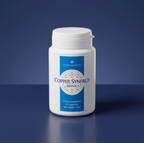
Copper Synergy Repair combines sodium copper chlorophyllin with 8 synergistic ingredients. Copper contributes to the normal functioning of the nervous system.
Sources
- Tardy AL et al. "Vitamins and Minerals for Energy, Fatigue and Cognition." Nutrients, 2020; 12(1):228. PMID: 31963141.
- Gomez-Pinilla F. "Brain foods." Nature Rev Neuroscience, 2008; 9(7):568-578. PMID: 18568016.
- Glade MJ, Smith K. "Phosphatidylserine and the human brain." Nutrition, 2015; 31(6):781-786. PMID: 25933483.
- Kennedy DO. "B Vitamins and the Brain." Nutrients, 2016; 8(2):68. PMID: 26828517.
- Suliman NA et al. "Establishing Natural Nootropics." Evid Based Complement Alternat Med, 2016; 4391375. PMID: 27829891.
- Maczurek A et al. "Lipoic acid as neuroprotective treatment." Adv Drug Deliv Rev, 2008; 60(13-14):1463-1470. PMID: 18655815.
- Crichton GE et al. "Dietary antioxidants and cognitive function." Plant Foods Hum Nutr, 2013; 68(3):279-292. PMID: 23881465.
- Kesse-Guyot E et al. "Fish consumption and cognitive function." J Nutr Health Aging, 2011; 15(2):115-120. PMID: 21365164.
- Bourre JM. "Effects of nutrients on the nervous system." J Nutr Health Aging, 2006; 10(5):377-385. PMID: 17066209.
Medical disclaimer. This article is for informational and educational purposes only and does not constitute medical advice, diagnosis, or treatment. Always consult a qualified healthcare professional before starting any supplement, especially if you are pregnant, nursing, taking medication, or have a diagnosed medical condition. Statements about copper and health refer only to EU-authorised health claims. Individual results may vary. Copper Synergy Repair is a food supplement and is not intended to diagnose, treat, cure, or prevent any disease.


